The shift in export rates: what you need to know
“Ch-ch-ch-ch-changes!” The landscape for solar and battery owners is shifting, and we want to give you a clear look at what’s happening with your export rates and why.

At Octopus, our goal has always been to offer a fair market rate for the energy you feed back into the grid. To date, those rates have been based on wholesale market values. However, two major factors are currently reshaping how we calculate that value.
1. New Network Rewards
A great development for solar and battery owners is that the Electricity Authority has introduced new regulations. These require local distribution companies to reward you for exporting energy when it provides value to the network.
Typically, this "value" happens during times of high congestion—think cold winter mornings at breakfast or busy evenings during dinner. This “value” and the time it occurs will be different by network depending on the state of the infrastructure and the demand in that network.
The Reward: While each network determines its own pricing, we expect this reward to be roughly 2–5c per kWh during specific winter peak periods.
Our Promise: We will incorporate these rewards into your export prices so you get rewarded fairly for helping power the grid.
2. Evolving Wholesale Markets
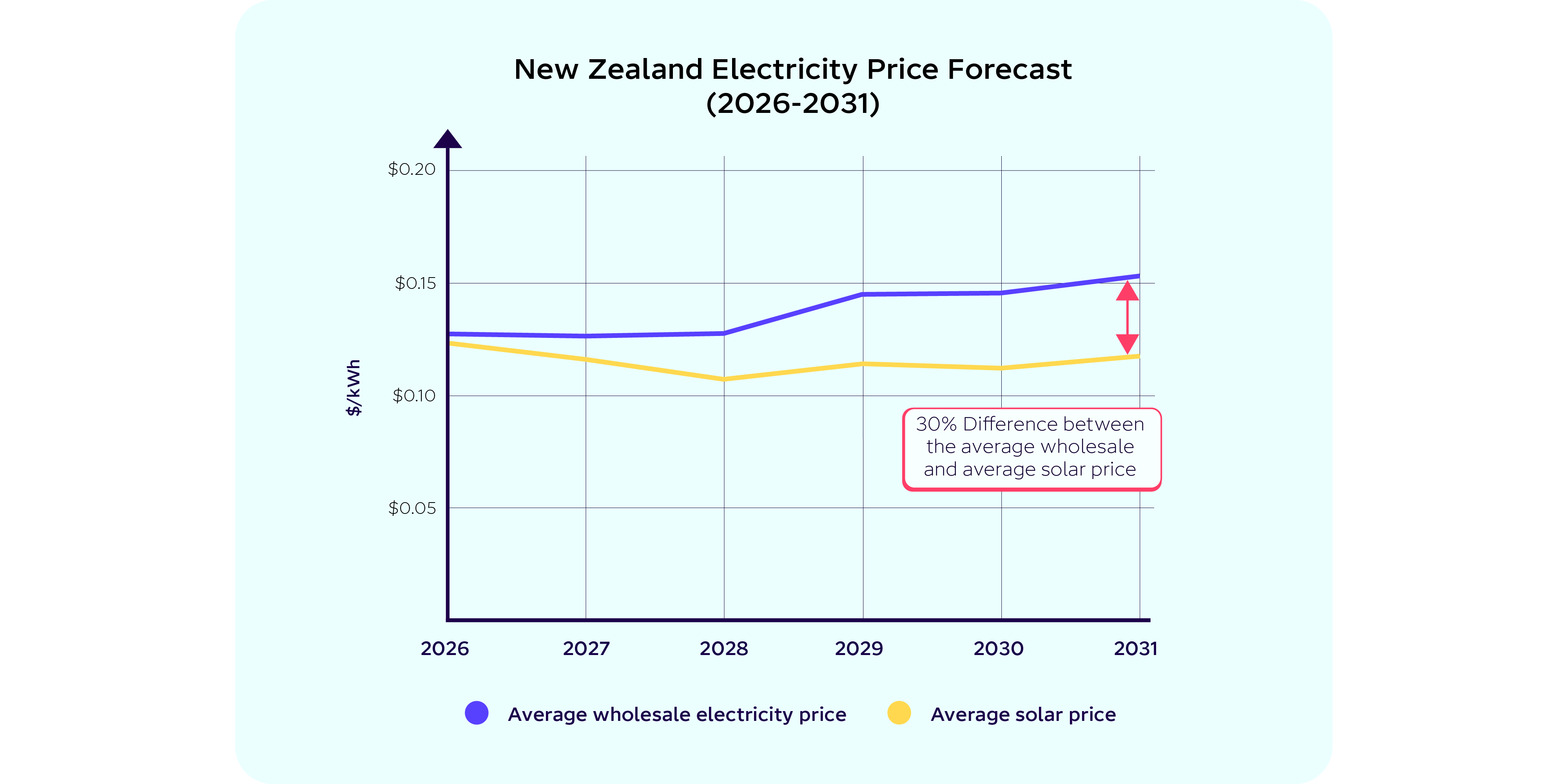
The wholesale market is also changing as New Zealand’s energy mix evolves. While average prices are staying relatively high, the gap between "peak" and "off-peak" prices is widening. We rely on expensive generation, such as gas or batteries, to keep the lights on during the morning and evening peak periods. Because of this peak prices remain high and are forecast to increase further.
The average solar price tracks the price solar generators actually receive. As more solar enters the grid, prices during sunny daylight hours are dropping because there is more generation than demand. On the flipside, when the sun goes down and demand rises, prices become significantly more expensive as the grid is forced to fire up costly flexible energy sources (like gas and batteries).
What this means for your rates
To reflect these market shifts, we are moving away from a single "flat" export rate.
From April, most customers will transition to a Peak and Off-Peak export rate. This means we’ll pay you more for energy exported during high-demand periods and less for energy exported during off-peak times. Over the coming years, we expect the difference between these two rates to grow.
How to make the most of it
This change is a great incentive to look at how you use your energy. By shifting your usage or investing in battery storage, you can store your midday generation and export it during peak windows - helping you get the maximum possible value from your solar setup.
