People Have the Power: Hamish Hills
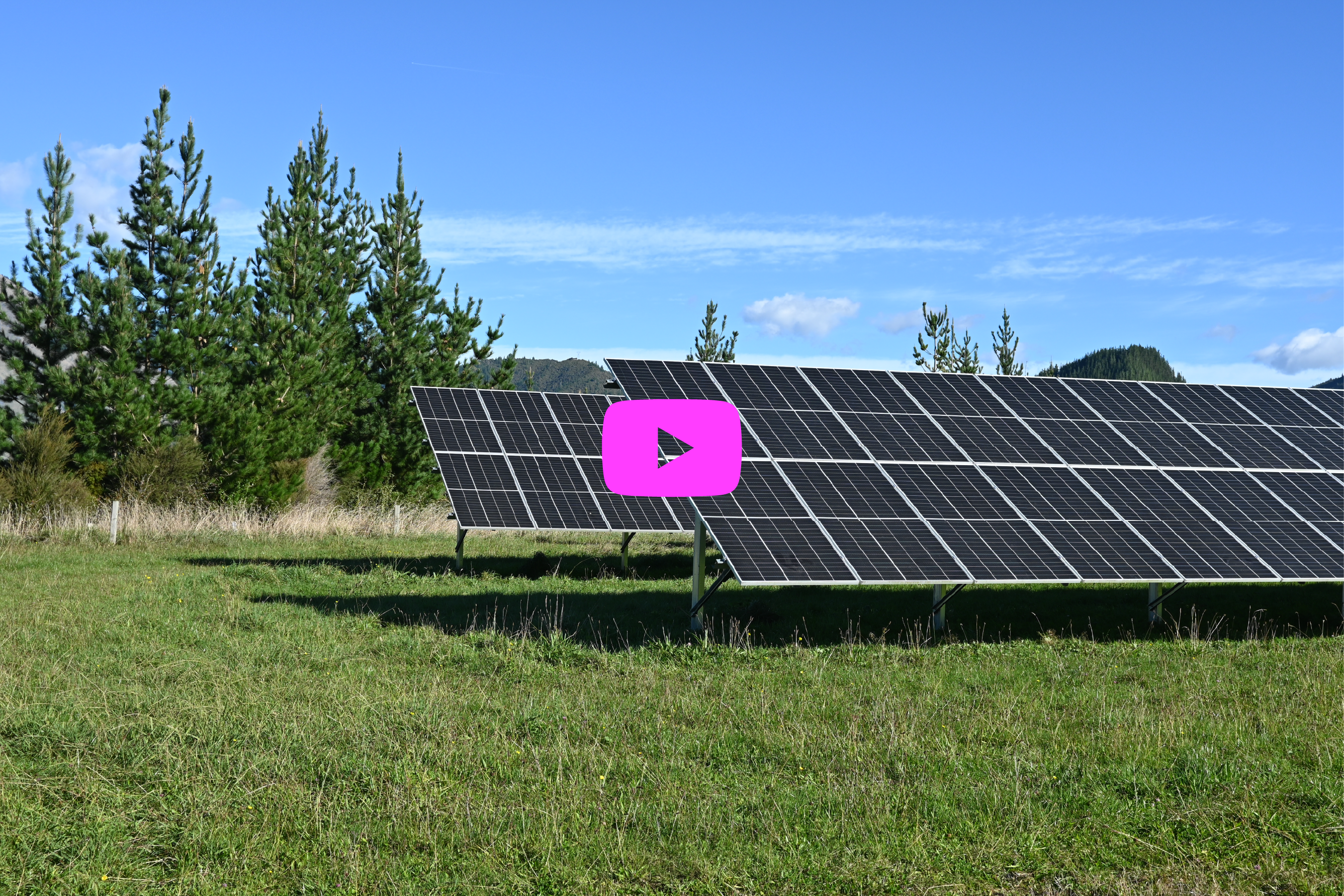
For our latest field trip, we headed out to the beautiful Tākaka in Golden Bay to catch up with Hamish Hills. Hamish is a second-generation dairy farmer who, alongside his family, decided to think outside the paddock. They’ve built Tākaka’s very first solar farm - a massive 2.5-hectare setup packing nearly 3,000 north-facing panels that produces 1.43MW of energy. The project is such a brilliant addition to the region that it took home the Environmental Award at the Nelson Tasman Chamber of Commerce awards in 2024, after just a year of operation.

People Have the Power is a content series bringing you people from around New Zealand who are focused on living a more sustainable lifestyle, be that through the home, work or travel.
We recently took a field trip to Tākaka to meet Hamish, learn more about his solar farm and how Octopus is doing energy better for his business.
In this chat, Hamish opens up about what it’s really like to "run the gauntlet" on the electricity spot market, how he uses his solar setup to hedge against dry summers on his un-irrigated dairy farm, and the unexpected challenges of building during COVID (not to mention a rogue animal causing a two-week outage!). It’s an honest, down-to-earth look at the highs, the lows, and the low-maintenance reality of generating power in Golden Bay.
Watch the conversation here or read the transcript below.
With a solar farm of his scale Hamish is in the unique position of being on spot market supply with Octopus, which means that his prices are tied to the wholesale energy market. For our business customers who don’t operate large scale solar, our Shape Shifters plan provides 16 hours of cheaper Off-peak energy every day – guaranteed.
The Shape Shifters plan is designed for businesses that can flex their energy usage or naturally operate outside of standard peak hours. It guarantees 16 hours of cheaper, off-peak power every day. Because it uses seasonal pricing with lower rates during the summer months (October to March), it's an ideal match for companies that consume more power in the warmer half of the year or those that can intentionally shift their heaviest operations away from peak morning and evening times.
If Shape Shifters sounds right for your business, request a quote from our business team today.
octopusenergy.nz/business
Let's get into the conversation with Hamish.
Byron: Today we are here with Hamish at the solar farm. Pretty impressive setup. It's got nearly 3,000 panels measuring at around 1.4 megawatts of output. Hamish, do you want to tell us a little bit about you and your setup?
Hamish: I'm a second-generation farmer here in Golden Bay, and we've had this for three, four years now.
Byron: Three, four years. That sounds like a bit of a journey. How has it been working out for you?
Hamish: Yeah, not too bad. Once you get over the construction side of it and everything and you turn it on, you sort of don't really have to do a lot. You just, yeah, got to hope the electricity price stays strong.
Byron: You are running a working dairy farm at the moment, and you've also got this huge solar farm setup. So where did the idea to set this up come from?
Hamish: Well, it originally started at my parents' house. They've got a swimming pool, and with grandkids, incredibly cold. We had a local electrician up here discussing it, and he said about solar, and said what the returns were. So the next day, me and my father were talking down by the cowshed roundabout, and yeah, we're just discussing going, man if the payback's that good, what happens if you do it on scale?
And I knew nothing about solar, and that's when yeah, the Googling started. And it was quite a process to be fair, like learning about it. And you know, Network Tasman's fantastic, so the first point of call I actually reached out to them and said, "How big could we build something?" So they said roughly the capacity that we had. From there, I realised, okay, yep, so this is the size we can build. Then like, how do I get paid for doing it? And that's when yeah, started to realise, you know, you need to get a PPA (Power Purchase Agreement) or the spot market. Obviously, it was quite a process. We sort of did it before it was like the cool thing to do, so we really learnt along the way. And during that COVID period as well and it was, I think that much work had gone into it, that it was like, just had to do it. Even though interest rates were climbing, everything else, costs were increasing, it was just sort of that much time had been invested, it's like, if you do nothing, nothing will happen.
Byron: You are on the spot market electricity with Octopus, and obviously that has some highs and it has some lows. Overall, how would you say that's been working out for you?
Hamish: Oh, yeah, it's been, it's just been a tough six months, as you guys would have seen. Like, you see at the spot price, January was an incredibly tough month. We were on a fixed term PPA to start with, then we moved to the spot market.
Octopus were good to deal with, and Alex [Octopus NZ’s Head of Energy Procurement & Trading] obviously. I get a rough forecast, saying ‘hey look this is what we're sort of seeing moving forward’, so that’s really good. And I do ring with questions, and Octopus is really helpful. Sending through the links, because obviously I’m not all of that stuff. I’m not heavily into selling power, the energy market, the futures and that sort of thing. So when I have bad months he writes in the email ‘I’m sorry mate its been a tough month’. But yeah you know we just couldn’t secure a PPA that's viable to make any money. So we had to essentially just run the gauntlet, like we are, that's probably the hardest thing I've found about this whole thing is trying to get a PPA, which allows you to survive
Byron: One of the scariest parts about being on the spot market pricing and opening up one of these big solar farms is that there's no real security. Some of those good months can be really good, some of the bad months can be really bad, but you'd hope it averages out over...
Hamish: Yeah, and it sort of, to be honest, it sort of does.
Byron: There's a little bit of functionality to having a dairy farm on one end and a solar farm on the other side as well, in terms of, you know, one season one performs better and the other season one ensures revenues, so...
Hamish: That's, that's how I picture it working, so we're an un-irrigated dairy farm. We milk 370 cows roughly once a day. And I had that thought going, "Oh when it gets really dry, it'll be okay because the power will be fine," and that was the, one of the ideas around it. So, it hasn't necessarily worked like that. Like this summer power-wise hasn't been great because of the spot market, but it's been a really wet summer here, so thankfully the farm's production-wise has gone okay.
Byron: Takaka being quite a remote area, there's not too much power generation out here. So, I do understand that your power goes towards the grid and helps power homes out here.
Hamish: Yeah, how that all works technically is well above my pay grade and how it gets distributed out. I understand it just sort of all goes to the grid and goes probably to the nearest point, even though I don't purchase it from there. But we are lucky too because we had the Cobb Dam here. And there's other people starting, they're doing these (solar farms) here now, there's already one already functioning across the valley. There's a couple of hydro schemes down in Golden Bay as well. So yeah, yeah, but hopefully, if it's ever needed, it can help with a bit of resilience.
Byron: What is an interesting experience you've had while running the solar farm?
Hamish: Yeah, don't know if it was while I was running it, but during the construction phase of it, you know, Lightforce and the team were fantastic through the construction side of it. And it was in, you know, really challenging times during COVID, whether it be the ferries continually not running, that was really tough. Labor, we had equipment that we had to get redone. It was just really difficult during COVID. During the running of it, to be fair, we don't really have to do a lot. We get a really heavy rainfall here, so it sort of cleans the panels off, so it's not too, we don't have to go and wash them all the time. We had a flashover. I don't know if it was a possum or a bird, and yeah, that put us offline for two weeks. It burnt out a comms cable, which caused a heap of issues. Other than that, pretty relatively low maintenance once you get going.
Byron: Right Hamish, well, thanks so much for having us around at your solar farm.
